Winter Roof Safety Is Often Overlooked. Snow removal for roofs barely gets attention and is often ignored until a leak, crack, or sag forces an emergency call. From a professional maintenance perspective, that is when costs and risk are already climbing.
Real winter conditions in Ontario rarely match design assumptions. Wet, heavy snow, drifting from neighbouring buildings, and freeze–thaw cycles can quietly push a roof beyond its intended capacity long before visible damage appears. What looks like a light blanket can be several tonnes of unevenly distributed weight, stressing trusses, joists, and connections.
Removing snow from the roof is not about appearance or convenience. It is about protecting structural integrity, limiting liability, and preventing the kind of moisture intrusion that leads to interior damage and operational disruption. This blog will examine the structural, moisture-related, and liability risks associated with roof snow accumulation and explain when professional removal is warranted.
The Structural Impact of Snow Load on Roof Systems
Snow load is a dynamic force that changes with every storm, wind event, and temperature swing. As snow accumulates, it adds vertical load to trusses, beams, purlins, and deck panels, and the real concern is how that load is distributed.
Snow buildup on sloped residential roofs tends to shade more easily. But the wind sometimes pushes the snow into certain spots. Like roof valleys, or around dromers, where heavier buildup is witnessed. With nowhere for snow to go, flat commercial roofs can develop dense snow pockets that stress the structure below.
Older roofs deserve particular attention. Snow removal for roofs is crucial to balance materials fatigue, fasteners loosening, and past modifications or additions may have consumed structural reserve capacity. When rooftop equipment, such as HVAC units or solar arrays, is added over time, the margin for error under heavy snow is reduced.
Flat and low-slope roofs are especially vulnerable to:
- Load concentrations where drifting is consistent
- Ponding when meltwater cannot reach drains due to ice or debris
- Progressive overstressing of connections and deck panels
A roof may not fail suddenly, but ongoing weight can slowly compromise its strength. Reducing snow load early helps preserve the system. Working with an experienced commercial roofing company in Toronto, like PWCR, ensures your roof meets safety, performance, and building code standards.
Moisture, Ice Dams, and Long-Term Roof Damage
Snow load is only part of the risk. Moisture migration and freeze–thaw cycles gradually undermine roof performance over multiple winters.
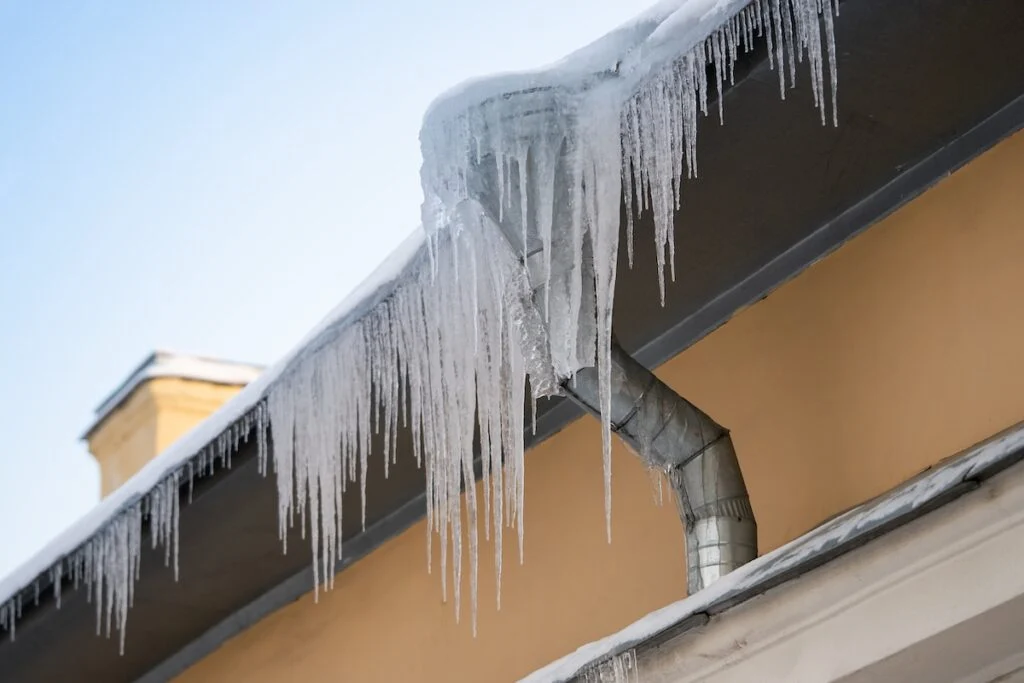
As the indoor heat moves upward on sloped roofs, it melts the snow in the upper roof area. The water from the melting snow comes in contact with a much colder area, escaping the roof’s edge, where the water starts freezing again. This continuous process of melting and refreezing caters to the buildup of ice along the eaves, also termed an ice dam. This results in blocking drainage, causing the water to seep under shingles and flashing. That flows through criticalparts of the roof, which are not really designed to handle moisture content.
On commercial membrane roofs, similar behaviour occurs around drains, scuppers, and parapet edges. Ice can partially block drainage, creating shallow ponds. As water repeatedly freezes and thaws, seams are stressed, and small vulnerabilities in the membrane can grow.
The downstream effects are costly:
- Wet insulation loses R‑value and increases energy costs
- Moisture can damage vapour barriers, ceilings, and interior finishes
- Chronic leaks may lead to mould growth and indoor air quality problems
From a professional standpoint, reducing snow and ice is preventive work. The objective is to minimize both structural loading and the volume of water available to infiltrate the system, rather than waiting for visible leaks that signal more serious damage.
Identifying When Roof Snow Removal Is Required
Most owners will not calculate snow load, but they can recognize practical warning signs that justify a professional inspection. Questions about how to remove snow from the roof usually come up after major winter storms.
Outside, concerning indicators include:
- Deep or compacted snow, particularly when wet
- Uneven accumulations and drifts along parapets, corners, and valleys
- Gutters or soffits that appear stressed or distorted
Ice patterns provide additional clues. Heavy icicles, recurring ice ridges along eaves, and thick buildup around downspouts suggest both heat loss and drainage issues that increase risk.
Inside, warning signs include:
- New ceiling stains after snow or mild weather
- Cracking or popping sounds from the roof area during or after storms
- Doors or interior partitions that suddenly misalign
Different roof designs behave differently under load. Buildings with large open roof areas or aging wood framing tend to show stress earlier in winter. Snow removal for roofs in these situations should be carefully managed by professionals.
Professional Standards for Roof Snow Removal
Proper roof snow management is a risk-controlled operation. Reputable providers start with a structured assessment rather than rushing to clear the surface.
A typical approach includes reviewing roof type, age, known structural details, historic leak locations, and current site conditions. From this, a plan is defined: which areas to prioritize, how to reduce load gradually, and how to avoid destabilizing the structure by clearing one zone too aggressively while leaving heavy drifts elsewhere.
The objective is controlled snow load reduction, not bare-roof cleaning. Leaving a thin, uniform layer of snow often protects roofing materials better than scraping down to the surface, which can damage shingles or membranes. The focus is on restoring safe loading while preserving the integrity of the system.
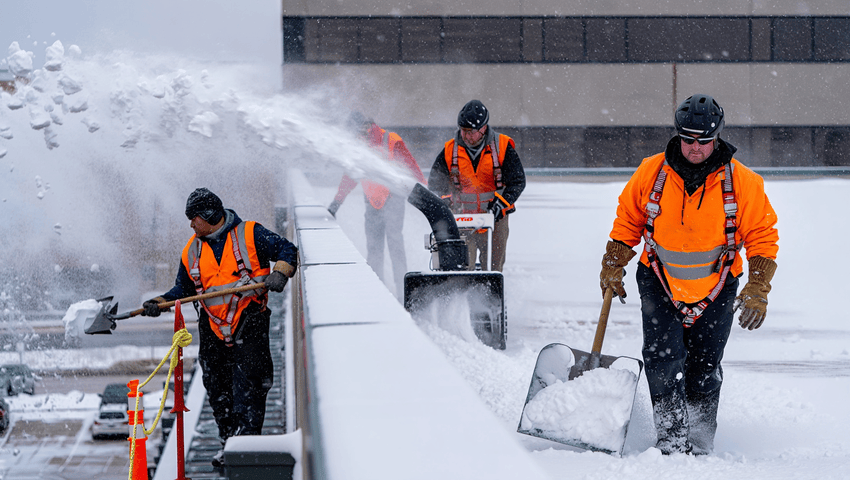
Safety standards are fundamental. Roof snow removal crews operate under formal safety plans, using approved fall protection equipment and controlled access methods. Public areas below are clearly marked and secured. This kind of work requires trained personnel and proper insurance, not quick fixes.
Equipment Used in Safe Roof Snow Removal Operations

The choice and use of equipment are critical to safe, effective snow management. Professional teams rely on tools designed to reduce load without compromising the roof.
From the ground, extension systems allow snow reduction at eaves and critical edges while minimizing the need to step onto the roof. A purpose-built roof snow removal tool is designed to slide beneath snow with minimal friction and without gouging or tearing the roofing surface.
Roof rakes for snow removal may be used around perimeters to reduce edge loading, but only when handled with care. Professionals account for roof materials, weight balance, and the risk of snow falling below.
For larger or more complex properties, additional equipment such as aerial lifts, temporary anchors, and communication devices supports safe access and coordination.
Why Roof Snow Removal Is Not a DIY Task
Roof snow removal is one of the least suitable activities for untrained personnel. It combines height, slippery surfaces, wind, low visibility, and sometimes hidden ice under the snowpack.
Falls from roofs and ladders remain a major source of winter injuries. A single misstep can result in serious harm. In commercial settings, allowing untrained staff onto a roof can create significant liability exposure; on residential properties, homeowner attempts can complicate insurance claims if an accident occurs.
Using the wrong approach can create new problems. Aggressive scraping can damage roofing materials, and pulling snow off without a plan can overload areas below. Quick fixes often shift weight into already stressed parts of the roof. Insurers expect property owners to manage these risks properly, which is why professional services matter.
Professional Roof Snow Removal Services: What They Involve
A professional service structure gives owners predictability and control. Providers like PWCR begin with a site evaluation covering roof configuration, access points, historic issues, and operational constraints such as operating hours and public access.
Trained crews then execute work using methods and equipment matched to the roof system. On commercial sites, coordination around mechanical equipment, skylights, and parapets is critical, as are the long-term effects of snow and ice on your commercial roof, including membrane wear and drain performance. Residential roofs demand care around architectural features, multiple roof planes, and landscaped areas below.
Service scope typically includes:
- Load and condition assessment
- Prioritized snow load reduction in high-risk areas
- Protection of drainage paths and vulnerable details
Immediate professional intervention is recommended when there are signs of distress, visible deflection, cracking noises, persistent leaks or after unusual events such as heavy, wet snow following multiple prior storms.
Cost Considerations for Roof Snow Removal Services
Budgeting for winter roof care means understanding the variables that shape pricing. Roof design and accessibility directly affect how snow removal is approached. Taller, steeper, or more complicated roofs often require additional safety measures.
Snow conditions matter as much asthe area. Light, dry accumulations are faster to manage than dense, wet, or wind‑packed snow. Deep drifts around parapets or equipment and significant ice buildup increase labour and require more precise load management.
Owners often compare one-time emergency calls with the structured roof snow removal cost for winter plans. When snow removal is handled reactively, especially during heavy storms, pricing reflects the urgency. A proactive plan helps reduce both costs and damage risk.
A transparent provider will explain these factors clearly, aligning service levels with both risk tolerance and budget.
Proactive Roof Snow Management Prevents Costly Damage
Canada’s winters can test your roof’s integrity to a greater extent. The key factor is how well your roof can support the added load of snow. Delaying removal allows stress to build, which can lead to real damage. Early snow removal helps protect the roof’s strength. Early removal helps prevent that. Homeowners should plan for professional service to treat and manage snow buildup to support consistent building performance. Businesses trust PWCR, as a reliable commercial roofing company in Toronto, for safe, compliant, and professional roofing work.