A commercial roof can look perfectly fine from the outside while hidden damage slowly spreads underneath.
Across Ontario, many commercial property owners don’t notice roofing issues until summer storms, heat, and heavy rain make the damage impossible to ignore. By then, a small repair often turns into a much larger and more expensive problem.
At Province Wide Commercial Roofing, commercial roofing teams regularly inspect buildings where minor spring damage later leads to emergency leak repairs, insulation replacement, interior damage, and costly downtime.
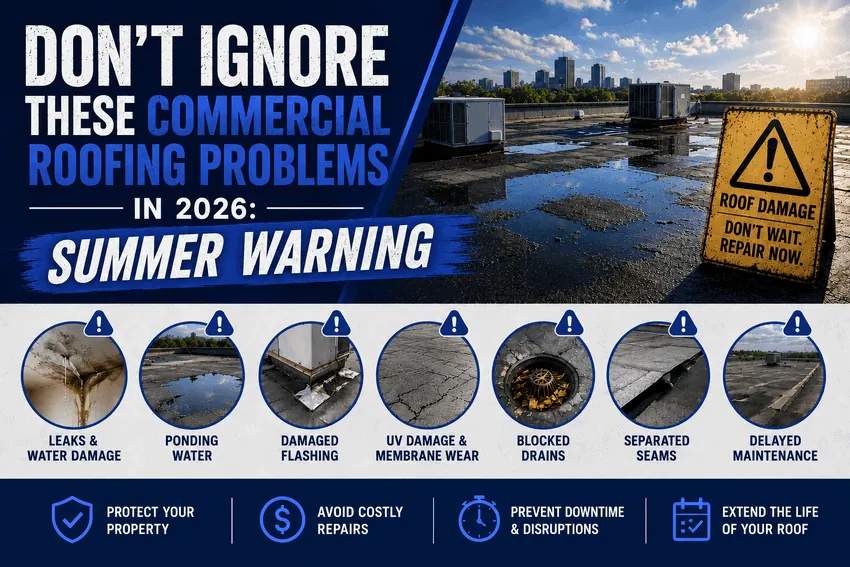
This guide covers the most common commercial roofing problems in 2026, why they get worse during summer, and what Ontario property owners should pay attention to before repair costs rise.
Why Commercial Roofing Problems Are More Common in 2026
Commercial roofs in Ontario go through a lot every year. Snow buildup, freeze-thaw cycles, strong winds, rainstorms, and summer heat all put pressure on roofing systems. On older roofs, even small weak spots can quickly become serious once temperatures rise. Another reason problems are increasing is delayed maintenance. Many property owners postpone inspections or small repairs to reduce short-term expenses. Unfortunately, hidden moisture and membrane damage continue spreading in the background. By summer, the repair bill is often much higher than expected.1. Small Roof Leaks Turn Into Major Repairs
A small leak may not seem urgent at first. In many commercial buildings, water slowly enters insulation and roof decking long before visible signs appear indoors. Once heavy summer rain arrives, the damage usually spreads faster.Signs to Watch For
- Ceiling stains
- Dripping water during storms
- Damp insulation
- Musty smells
- Bubbling paint
- Moisture around walls or vents
Why It Gets Expensive
What starts as a simple flashing repair can eventually lead to:- Interior repairs
- Mold cleanup
- Damaged inventory
- Electrical issues
- Business interruptions
2. Ponding Water Damages Flat Commercial Roofs
Standing water is one of the biggest problems on flat roofing systems. After snow melts or heavy rain, water may stay trapped on the roof because of blocked drains, poor drainage, or low areas in the structure. If water sits too long, the roofing material begins breaking down faster.Common Causes of Ponding Water
- Clogged roof drains
- Poor roof slope
- Damaged insulation
- Structural settling
- Debris buildup
What Happens If It’s Ignored
Ponding water can lead to:- Roof leaks
- Membrane damage
- Faster roof aging
- Structural stress
- Weak seams and cracks
3. Flashing Damage Allows Hidden Water Intrusion
Flashing protects the most vulnerable areas of a commercial roof. This includes areas around:- HVAC units
- Roof edges
- Skylights
- Pipes
- Vents
- Wall connections
Why This Problem Often Goes Unnoticed
Flashing damage usually starts small and hidden. Water may enter behind walls or under the roofing system without obvious signs inside the building. By the time stains or leaks appear, moisture damage may already be widespread.4. Summer UV Exposure Speeds Up Roof Deterioration
Commercial roofs absorb constant sunlight during summer. If the roof already has cracks, weak seams, or aging materials, UV rays can speed up deterioration quickly.Roofs Most at Risk
- Older flat roofs
- EPDM roofing systems
- Modified bitumen roofs
- Aging TPO membranes
- Poorly maintained roofing systems
Signs of UV Damage
- Surface cracking
- Blistering
- Shrinking materials
- Open seams
- Brittle membrane areas
5. Blocked Roof Drains Cause Emergency Problems
Commercial drainage systems handle large amounts of water during Ontario storms. When drains become clogged with leaves, dirt, or debris left behind after winter, water cannot flow properly off the roof.Problems Caused by Poor Drainage
- Roof leaks
- Ponding water
- Overflowing gutters
- Structural pressure
- Fascia damage
- Water around the foundation
6. Roof Seams Begin Separating in Warm Weather
Commercial roofing membranes naturally expand and contract as temperatures change. Over time, seams may weaken or begin separating. Once summer heat arrives, movement in the roofing material increases and small seam issues can spread quickly.Why Open Seams Are a Serious Problem
Separated seams allow water to move underneath the membrane where damage is harder to detect. This can lead to:- Wet insulation
- Larger leaks
- Reduced energy efficiency
- Wind uplift damage
- Premature roof failure
7. Delayed Roof Maintenance Leads to Bigger Costs
One of the most common roofing mistakes is waiting until a leak appears before calling a contractor. Most commercial roofs show warning signs long before serious failure happens. Regular inspections help catch small problems early while repairs are still manageable and affordable.Preventive Maintenance Helps Reduce:
- Emergency repair costs
- Interior building damage
- Business interruptions
- Premature roof replacement
- Long-term maintenance expenses
How Ontario Weather Affects Commercial Roofs
Ontario weather creates year-round stress on commercial roofing systems. During winter, roofs deal with:- Heavy snow
- Ice buildup
- Freezing temperatures
- Moisture infiltration
- Strong winds
Warning Signs Your Commercial Roof Needs Attention
Many roofing issues can be spotted early if the roof is inspected regularly.Common Warning Signs Include
- Standing water
- Bubbling roofing membrane
- Interior water stains
- Sagging roof areas
- Loose flashing
- Mold or mildew smells
- Overflowing drains
- Cracks near seams
- Rising cooling costs
Why Preventive Commercial Roof Maintenance Matters
Preventive maintenance helps commercial property owners avoid unexpected roofing costs. It also helps:- Extend roof lifespan
- Improve energy efficiency
- Reduce leak risks
- Protect tenants and equipment
- Maintain property value
- Avoid sudden repair emergencies
When Should Commercial Roofs Be Inspected?
For most Ontario commercial properties, roof inspections are recommended:- In early spring
- After major storms
- Before summer heat waves
- Before winter starts
Choosing the Right Commercial Roofing Contractor in Ontario
Commercial roofing systems require specialized experience. When hiring a roofing contractor, look for a company with:- Commercial roofing expertise
- Flat roof experience
- Preventive maintenance programs
- Emergency repair services
- Proper licensing and insurance
- Detailed inspection reporting
Protect Your Commercial Roof Before Summer Repair Costs Rise
Commercial roofing problems rarely fix themselves. Small issues that seem manageable during spring can become expensive once summer weather puts additional stress on the roof. Scheduling an inspection early can help prevent:- Large roof leaks
- Structural damage
- Interior repairs
- Mold problems
- Emergency service costs
- Premature roof replacement
Schedule a Commercial Roof Inspection in Ontario
Province Wide Commercial Roofing provides commercial roof inspections, maintenance, repairs, and replacement solutions across Ontario. Their team helps commercial property owners identify roofing issues early and avoid unnecessary long-term repair expenses.Frequently Asked Questions (FAQs)
What are the most common commercial roofing problems in 2026?
Common problems include roof leaks, ponding water, flashing damage, blocked drains, membrane cracks, and seam separation.
Why do roofing problems get worse during summer?
Summer heat, UV exposure, and heavy rain place extra stress on weak or damaged roofing systems, causing small issues to spread faster.
How often should a commercial roof be inspected?
Most commercial roofs should be professionally inspected at least twice per year, especially in spring and before winter.
Can a small roof leak become a major problem?
Yes. Even minor leaks can damage insulation, walls, ceilings, electrical systems, and inventory if left untreated.
What causes ponding water on flat roofs?
Ponding water is usually caused by blocked drains, poor drainage slope, damaged insulation, or low roof areas.
Is preventive roof maintenance worth it?
Yes. Preventive maintenance helps reduce repair costs, extend roof lifespan, and prevent larger structural problems later.